Showing posts with label improvisation. Show all posts

Sunday, January 21, 2018

Melodic Contour Exercise

An effective and quite creative method for composing/improvising strong melodies would be to connect it with the visual artist's technique of contour drawing.

In contour drawing, the artist looks at the landscape (say mountains and hills on the horizon) and closely inspects the line that is created by the edge of the land where it meets the sky. As they put pencil to paper, they will not draw the mountains or sky, but will simply draw the shape of the line where the two meet. Even by drawing a simple line they will accurately define much of the composition.

Image result for contour drawing mountainsThis type of drawing technique is very common in quickly sketching out an outline of any object just by defining the lines that create the boundaries. By adding more lines they can illustrate the contour in a more detailed fashion.

So think about this concept as it relates to melodic motion and contour in music. For musicians, the melodic contour is similar to the line. Does it ascend? Descend? Is there a climax? Is it smooth (conjunct, stepwise motion)? Or is it jagged (by leaps)? Maybe there is a repetition of a sequence of lines (notes) that repeat?

EXERCISE: 1. Look at the line drawing of this mountain. Pick a line where it starts on the left side (maybe start at the horizon.) Then let your eyes travel from left to right at a steady tempo of your choice. In your mind's ear choose a starting pitch. As you follow the line, audiate or sing in your head a melody that follows's the artist's line. Try to follow it all the way to the end of the line. The rhythm can vary and this won't be determined by the line. Phrasing is important so somewhere on your eye's journey take a rest when the phrase feels like it comes to a musical pause. Then continue. Depending on the tempo of your eyes you may have 1-4 phrases (perhaps more if you are moving slowly.) 

2. Once you finish try this with a different line in the drawing. You can also try it in retrograde (going from right to left.)

3. Finally, apply this to your voice or instrument. Use this drawing or the lines on any piece of artwork. Record your results and listen back.

What do you think? Pretty interesting right? It is sort of like reading a score but more creative since you are forced to add the notes and phrasing. But the melodic shape is set in stone by the drawing. The final step is to consider this concept as you play composed or improvise melodies. Picturing a line in your head as you play will make you sensitive to this musical element.

Friday, March 14, 2014

Focus, Drive and Coltrane


John Coltrane was intense. 

There have been many accounts of this great saxophonist's singular purpose and drive. Those who observed him practicing have said it is unlike anything they have every seen. I remember Denis Diblasio sharing a story about Coltrane's extended sessions blowing in the mechanical room of a venue he was performing in. Despite the gig every night, he was still exploring up to 12 hours at a time. It was a wild sight.


Anyone who saw Coltrane or listened to his recordings from the late 1950s to 1960s knows that this man was reaching for something. And he had the focus and attention to someday grab it.
Now Coltrane, like many jazz musicians of that era, struggled with drug use in his past (particularly heroin). Interestingly, once he kicked the habit, he entered his most exciting, creative period of his career.  He was exploring new harmonic progressions (Giant Steps, 1960). He was extending the modal vocabulary defined by Miles and Shorter (My Favorite Things, 1961). And he was reaching to experience the free-est of the "free" jazz (Ascension, 1966). All while sober.


How was he able to focus this intensely? How did he keep his mind from wandering? How did he keep himself from being interrupted in the middle of the creative explorations? Was he ever distracted to just go watch some TV? These are questions many people ask about Coltrane's practice ethic. 


Coltrane attributed his work to forces beyond himself. He was a very spiritual person (he carried with him a variety of religious texts) and said his music came from a higher power. I think Coltrane tapped into that same power that  Mihály Csíkszentmihályi describes as "flow". In positive psychology, flow is "mental state of operation in which a person performing an activity is fully immersed in a feeling of energized focus, full involvement, and enjoyment in the process of the activity". That seems to describe Coltrane to a T.


From sax player Mel Martin:


In a private interview, John Coltrane spoke of a higher power. He felt that there were forces beyond himself that were driving his music to higher planes of consciousness. He certainly was on to something because he developed in a way that has never been seen before or since. This, however, never stopped him from practicing and developing his skills to the utmost. Jimmy Heath called him the greatest "practicer" that ever lived and, indeed, I witnessed him with his Quartet in the 'sixties where he would solo at great length and then go into the dressing room and keep playing while McCoy Tyner and the others soloed. This phenomenon was observed by many and led to a kind of blind imitation of both his style and approach. It is not possible to duplicate the spirituality that drove John Coltrane. It certainly is possible to be inspired by the man and his music and many were. But the important thing is for every artist to follow their own muse. Music is many things to many people. It can be a philosophy, a style, a way of life. Music, like all art, is never merely technical.


So what can we learn from Trane and adopt into our own creative practice? After all, most of us will not ever be able to devote the length of time to our craft as described in the above encounters with Coltrane. However, I think we can all strive to emulate that intensity in the time we do have. If you have half an hour for a creative project, milk that 30 minutes for all it is worth. Instead of only giving part of your attention, try to focus on your output with the same simmering intensity that you see when Coltrane plays.

I leave with you a video from 1963 of Coltrane's "Alabama". It is a haunting ballad written a mere few days after a church bombing enacted by a chapter of the Klan killed four children in Birmingham. While Coltrane is not playing as fast and frenetic as he does in his more exuberant explorations, I think this clip illustrates his focus and intensity in a unique way. Just watch his presence throughout the clip. Many describe his reverence in playing as a musical prayer. To me, it is the perfect portrait of man in the deepest state of concentration and flow.


Sunday, February 2, 2014

Conversational Exercise: Let's Chat!


Glenn Gould
There is a section entitled "Truck Stop" in François Girard's 32 Short Films about Glenn Gould that sparked the content of this post. Glenn Gould, the eccentric classical pianist, visits his regular haunt, a diner in Toronto. In the scene, he orders his breakfast and while waiting begins listening to the chatter going on around him. He becomes mesmerized by not the content of the conversations, but the musical language. We can see Gould listening to these unrelated conversations happening on opposite sides of the diner. The director portrays him absorbed in this breakfast chatter as a sort of counterpoint. Perhaps, the "Art of the Breakfast Fugue"?


This attention to the interaction of voices inspired Gould in his 1967 project entitled the "Solitude Trilogy". The most famous work of this project was called "The Idea of North". Here Gould created a sound collage of overlapping spoken monologues.  It is strikingly avant-garde for someone steeped in traditional classical music. Then again, Gould was an eccentric.


There could be a comparison made between this experiment and counterpoint of the Baroque period that was Gould's primary piano gig. Counterpoint refers to melodies that are played simultaneously. In the same fashion Gould called this technique "contrapuntal radio". If you are interested, the entire recording can be found here.


I had an idea inspired by the above scene and Gould's experiment. Could we develop a creativity warm-up routine for 2 or more players modeled on the idea of carrying on a spoken conversation? Or perhaps simultaneous conversations? In a previous post, I demonstrated the idea of gesturing as a way of getting the mind in a creative state. Would the model from the Glenn Gould film work in a similar fashion for small groups of musicians?


Here is the idea:

  • Get together with a partner. Any instrument or voice would work.
  • You are going to have a conversation with the other person on your instrument. 
  • Begin improvising a melody. Maybe pick a key or tonal center to work with. You could also play free.
  • The partner should at some point respond to your statement.
  • The length of each statement is up to each of you. If you are really engaged in what they are playing, lay back and listen. If you have the urge to interrupt and speak your mind do it. Have nothing else to say? Stop.
  • At the beginning you may wish to set up parameters. (e.g. swap short phrases, demand silence in between phrases, use long discourse, overlap phrases, "talk at the same time" (counterpoint).
  • Eventually, the goal would be to remove the strict parameters and let the conversation unfold naturally.
The product here should be a little more detailed than a simple regular call and response. The goal is to interact in a similar way to an actual human conversation. This means allowing room for silence, discussion, interruptions, discourse, and listening. Keeping eye contact with the other participant is key. Just as in a spoken conversation a glance, nod of the head, or movement of the eyes can invoke a reaction.

Often in conversations, one person is the leader. They bring a topic to mind and can often direct (if not dominate) the conversation. In a similar fashion, you may find that one of you is "following" the other person. This is okay and entirely natural. If recognize this happening, then you may want to make a conscious effort the switch roles. Have the other person "lead" the discussion.


Really, there are no hard and fast rules with this exercise. You can add to it and develop it in any fashion you wish. Other ideas include:

  • limiting the conversation to just rhythmic ideas (use a single percussion instrument or clap)
  • include 3, 4 (or more!) people in on the conversation
  • have two different conversations (two pairs of musicians) going on at once
  • converse with people who are at different levels of musical maturity
  • instead of improvising, notate and compose a "conversation-like" piece 
  • set up scenarios for the conversation (using space in between, simultaneous conversations, different keys/tonal centers, through a tune or chord progression)
  • You can even "comp" while the other person is "talking". In other words, play a simpler supportive part while the speaker takes the lead. I think of this as akin to nodding your head and saying "uh-huh" or "yeah" during a casual conversation.
Here are some parameters I set up as John and I explored this exercise. Check them out and then find a buddy and have a chat!


Conversation with deliberate silence in between the melodic statements.


Conversation with short phrases and minimal silence in between.


Conversation with Comping (e.g. playing supportive parts during the other player's melodic statements)


 Simultaneous Conversation

Saturday, December 7, 2013

Gesturing: A Creative Warm-up Routine


There is an exercise in Betty Edward's Drawing on the Right Side of the Brain that has always stuck with me. It is called blind contour drawing. The basic idea is to look an object with a piece of paper and pencil in front of you. You are then instructed to draw that object without looking at your paper. At first it is an uneasy experience. You just want peek and see how it is coming along. This is not allowed until you are "finished". You can only keep your eyes on the object you are drawing.
Blind Contour Drawing


Of course, without looking at your lines you shouldn't expect a masterpiece. You shouldn't even expect it to look like the object you are drawing. The point of the exercise is the experience. The only thing you are able to do is look at the subject you are drawing and then feel the movement on the page. The point is to learn how to see better. The point is to learn how it feels to touch pencil to paper. Too many young artists spend the majority of their time looking at the paper and not enough time actually learning to see what you are drawing. This exercise encourages the artist to play. There is no final product. The now is all that matters.

Gesture drawing (gesturing) becomes a similar useful tool for the artist to get into that zone, or that special creative state I discuss in the first post. In gesturing, the artist can look at their paper but must complete the drawing in a short amount of time (30 seconds to two minutes). The focus here is on capturing the essence of the subject with broad strokes, not the details. This is a common warmup exercise in a life drawing class.
Gesture Drawing

Without worrying about how the finished product will look, the artist learns to get lost in seeing. Is there a parallel exercise in music that could provide this function? A way to just focus your complete attention pure sound, and not worry about the final product. A way to not think about style, form, theory, or harmony on an intellectual level. A method to experience those musical elements just by playing with sound.

I think most beginners experience this even before their first lesson. They take their instrument out of the case and just start to explore. It may honk, squeak, and create all sorts of dissonance. Their fingers explore the range and combination of the white and black keys. They discover what they can coax out of a set of open strings. It doesn't matter. They are having a blast exploring the sound spectrum. 

How about this? Have you ever picked up an unfamiliar instrument and tried to play it? Our first inclination is not to master technique, develop a repertoire, or even play the right notes. I find I want to explore the sounds it can produce. I play with the instrument. I learn how changing my physiology also changes the sound. I have fun. There is no pressure to sound good. "Its not my instrument. I'm just messing around!"

Here's my gesturing exercise for a performer. It is very open ended and you can add to it and alter it as needed. The goal is to warm up in a more creative fashion that will get you listening.
  • Sit with your instrument in a location where you can be uninterrupted for at least 10 minutes.
  • Close your eyes BEFORE you put your hands on the instrument.
  • Put your hands on the instrument.
  • Play the first note.
  • Listen.
  • Play a second note.
  • Listen. 
  • Keep your eyes closed.
  • Continue with the following notes.
Start off with long note values. You should still play in time. Feel a pulse. Eventually shorten the note values. Within a few minutes you should be playing continuous eighth notes. For this exercise don't worry about rhythm or space. Just keep the flow going. Do not play anything familiar. This should be pure improvisation. No changes, key, or form. Just a steady pulse and the forward motion of notes. 

You can and should explore the whole range of your axe or voice. But don't think of the names of the notes, arpeggios, scales or chords. Just play. At first you may keep the notes moving in a conjunct motion. Eventually, you should explore larger intervals. Harmonic players can work on adding chord with the notes. But there should be no set progressions. Just play.

At some point you may also wish to add space, but I find that at the beginning this may defeat the purpose of the exercise. The space may give you too much time to intellectually "think" about what you want to play next.


Jozefowicz's handscroll prints illustrate one way to visualize this exercise.
Every instrument (except voice) is visual in some respect. At some point in the gesturing open your eyes. Use them to play melodies (but still listen!). What shapes can you create? Pretend you are drawing lines with a pencil; but instead of paper you are making gestures on a keyboard, fingerboard, keys, or even embouchure.

You can also picture a staff in your head. Throughout the exercise, make these "lines" create interesting contours. For an even more "out there" idea, maybe look at an object and draw it with your instrument. Make the direction of the lines you play match the contours of the object.

Joe Diorio
This will seem strange, uncomfortable and silly for many. It may seem to be a waste of your practice time. Maybe it is. Just try it. Even if you don't think of yourself as an improvising musician I think it is a great way to "warmup". It is much more creative than merely playing ascending/descending scales (although this has value as well). It will get your chops going and get you focused and in a different place. A place more receptive to deep, active listening.

I borrowed some of these ideas from the great jazz guitarist Joe Diorio. In his clinics he has suggested similar techniques. The goal is not to create a masterpiece. The goal is just to play with sound, pitches, shapes and to listen. For more on this, check out Joe's great video "Creative Jazz Guitar". This would be illuminating to not just guitar players but all musicians.


The following video is a brief demonstration on how I use this gesturing concept. Keep in mind, the goal is not to create "great" music or even to worry about being musical. To goal is to listen carefully, keep the flow going, and to let the direction of the line guide you. In creating "real" music, I would never ignore space and play constant notes of the same value. However, this gesturing process is simply an exercise. For me it is a perfect combination of warm-up and meditation.


Monday, November 18, 2013

Creativity Killer: Anxiety and Stress

The life of a performing musician is stressful. Why? One reason is time. Music is an art form whose canvas is temporal. It exists in a finite space. As a result, anything that goes wrong in that little window of time cannot be corrected. The flaw remains.

I often envy some of the more "asychronous" artists such as painters, novelists, poets, sculptors. These artists create outside the boundaries of time. They can stretch their projects out for days or years. They can add or take away as needed until they have a finished project. There is much less urgency in these arts.


I'm sure many still work with deadlines and as a result feel a bit of anxiety. But it isn't the same. A mistake to a painter may only cost some materials and the time already spent on the project. They can go back and make corrections as needed. Sometimes a mistake may even open up new options. However, an error in a musical or dance performance if not handled correctly could derail the whole experience. There is no going back and correcting anything. It has happened and will always exist.


Stage fright is a very real phenomenon that every musician has experienced at least once in their life, usually at the beginning of their career. Sometimes the effects can be debilitating. No matter how much mastery was achieved in the practice room, when that adrenaline kicks in the novice performer stalls. Their body tenses. They forget to breathe. Mentally, they tell themselves, "Don't mess up!". Which, of course, results in another mistake. Which will snowball into more errors. They feel trapped, yet there is no place to go but forward in the performance.


This performance anxiety can be debilitating and it affects some more than others. To some extent it is always present, even in the most seasoned performer. However, the masters know how to channel this energy into creating a positive performance. How can we get to that point?


There are techniques one can use to help with this. The Inner Game of Music by Barry Green is often recommended as a manual for overcoming stress in performance. This principal bassist of the Cincinnati Symphony outlines a method for quieting that inner chatter that causes stage fright by defining two "selves". Quoting Green:
"Self 1 is our interference. It contains our concepts about how things should be, our judgments and associations. It is particularly fond of the words 'should' and 'should not' and often sees things in terms of what 'could have been. Self 2 is the vast reservoir of potential within each one of us. It contains our natural talents and abilities, and is a virtually unlimited resource that we can tap and develop. Left to its own devices it performs with gracefulness and ease."
Green's techniques are very helpful. The tricky part is practicing it. If you only perform intermittently, you will not be able to master these techniques. The more you perform, the more you will be able control the fears. It may even be the case that forcing yourself to perform a lot works as a kind of exposure therapy. In extreme cases, medicine like beta-blockers can assist if needed. However, none of these techniques will work one bit if the musician hasn't properly prepared. If you haven't put the time in the woodshed learning every nook and cranny of your art, no self-help book or psychopharmaceutical will help.


The Brill Building
However, there are some artists who work at their creative peak when they are stressed. In the 1960s, Aldon Music Publishing employed professional songwriters to work in the Brill Building in NYC. Their daily task was straightforward: write a hit pop song. Each morning songwriters like Carole King, Phil Spector, Neil Diamond and Burt Bacharach would clock in for a day of menial labor. Their task was to slave on the piano in their cubicle and write a tune. At the end of the work day they had to present their songs to the their boss, Donny Kirshner. Their paycheck depended on their creative output. To ramp up the anxiety, Kirshner would even pit the composers against each other. Despite this (or maybe because of it), many of the top hits of the early 1960s came out of this building.

In improvised music like jazz, the seasoned musician will note that there can be no mistakes if you are listening and reacting carefully. Because even if you start a melody on an unintended note, the best jazz musicians craft the notes AFTER the mistake to make the mistake sound correct. Sometimes these "mistakes" wind up creating some very interesting lines. The rest of the ensemble may respond in kind. Beginning improvisers often hear their mistake and cringe, thus making more mistakes. Master improvisers hear the mistake, embrace it and make it their own.


I leave you with this TED talk with Stefon Harris entitled "There are no Mistakes in Jazz". They start with a free jam that morphs into a tune. The talk begins at 6:30. He highlights the importance of not only embracing your mistakes but also the mistakes of your ensemble mates.


Monday, November 11, 2013

Aleatoric Exercise: Let's Roll!

Karlheinz Stockhausen 
presenting a graphical score
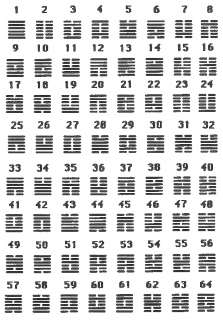
Aleatoric (or "chance") music is any music where some of the performance or composition elements are left up to chance. 20th century classical composers such as Pierre Boulez,  Karlheinz Stockhausen, and John Cage used a variety of techniques to incorporate randomness in their compositions. Boulez would compose a number of musical options that the musician could choose during a performance. This would create what Boulez called a "mobile form". Stockhausen would often use non-standard graphic notation which provides the performer with a general guide to interpret the music in her own manner. Thus the piece would change from performance to performance depending on the interpretation of the graphic. Cage composed his Music for Changes by consulting the I Ching (an ancient Chinese book that is used for divination) to determine duration and pitch as used in the composition.


The I Ching: 64 hexagrams used by 
composer John Cage 
and jazz guitarist Pat Martino
As jazz musicians explored "free" jazz and the avant-garde in the 1960s they would also add chance elements to their playing. In improvisation, musicians like Ornette Coleman, John Coltrane and Sun Ra would make one or more elements of the performance "free". They may abandon a defined meter, tonality, harmonic progressions, or even the beat. These elements would be free to the improvisor and their ensemble to collectively determine during the performance. Jazz guitarist Pat Martino has also used the above mentioned I Ching to explore string combinations available on the guitar.

An important aspect of all of the above examples is to recognize that the artist only uses chance for a part of the project. If the entire creation was left up to chance there would be no human input. It would not be music. However, using varying degrees of chance to lock in certain elements can get the musician to explore those other elements more freely (see the previous post on Limitation Exercises).


Let's explore. Any element of music can be left up to chance. Melody, harmony, chord progression, rhythm, and form are all fair game. It is best to start with just one and explore that thoroughly. You can also explore this as composition or as a spontaneous improvisation.


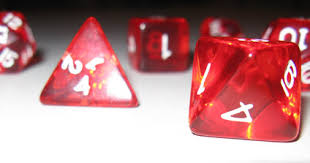
A set of polyhedral dice 
(d4, d6, d8, d10, d12, d20)
The first thing we need is a random generator. I don't think you need anything as esoteric as the I Ching. A simple set of polyhedral dice that you would would find at a game or hobby shop (or Amazon) would work well. For our purposes the most useful would be the following dice: d4, d6 (which you probably have already), d8, and d12. You can actually create any sided dice by always rerolling certain numbers (a d6 can be a d5 by rerolling any 6s).

I recommend real dice because nothing beats the feel of chance in your hands. But if you must, here is a useful "virtual dice" website.


I hesitate to define this process too much. Part of the fun is the exploration and the freedom. If one of these ideas sounds intriguing go for it. Don't be afraid to change it as you go or to even abandon the chance technique. If you hear something in your ear so strongly, then by all means stop the chance and start creating.


To get you going, I recommend you follow these steps:
  1. Choose a main element of composition or improvisation you would like to explore (harmony, melody, rhythm, form). 
  2. Define one aspect of that element (intervals, measures, chord tones, sections, chord quality, rhythm, meter, etc.)
  3. Match that aspect with the dice (d2/coin, d4, d6, d8, d10, d12, d20) that you feel is most appropriate. This is where you can be creative. Eventually you can combine these elements as well.
Here are some ideas to get you going. Choose one of them that seems interesting. Or let them inspire you to create your own. However, DO NOT do all of them at once. You will be overwhelmed. Choose just one for now! Later on you may combine them. Let's roll!


Melody:
  • Roll a dice to determine the interval from one pitch of a melody to the next. You can make the melody ascend/descend as needed to determine an appropriate contour. Use larger dice for a more disjunct melody. You can make the intervals major or minor depending on the key. 
    • Example: A roll of : 4, 2, 5 would yield a four-note motive. You can choose if you wish to ascend or descend with each interval.  Keeping it diatonic in the key of C Major and starting on Do could yield: C (up a 4th) F (down a 2nd) E (up a 5th) B.
    • Or you can ignore the key and use a coin or dice to determine if the interval is major/minor/augmented/diminished.
  • Roll a 12 sided dice to create a pseudo-"tone row". Designate 1 as a pitch with the other 11 forming the chromatic scale. You could ignore repeated notes or embrace them.
  • Choose a pitch collection that fits a particular dice. Some examples:
    • d4 - tones of a 7th chord; a tetrachord (like Do Re Me Fa or Fa So La Ti)
    • d6 - a hexatonic structure (like Do Re Mi So La Ti); a whole tone scale; a pentatonic scale (reroll 6s); a blues scale (1 b3, 4, b5, 5, b7)
    • d8 - any 7 note scale (major, harmonic/melodic minor, or their modes (reroll 8s), octatonic (diminished scale)
    • d12 - the chromatic scale
    • Then with that chosen pitch collection/dice, roll to compose a melody. Assign a value of the dice to each note. Roll until you feel you have a complete melody/phrase. Or you can even predetermine randomly how many rolls you will make. The choice of octave is up to you.
    • You can also any of the above to determine root motion (see harmony below).
  • You will need to create the rhythm and harmonic accompaniment of the "chance" melodies. This is how you will make this chance process musical and human. So once you have your notes, add rhythm and harmony to make it your own.
Harmony:
  • Roll a d4 to determine the quality of the next chord (major, minor, diminished, augmented).
  • Roll a d6, d8, or d12 to determine the root of the next chord.
  • Roll a d8 to determine the function (roman numeral of the next chord).
  • Roll a d12 to determine a single pitch that MUST be present in all of the chords you place in a piece (or a section of a piece). That tone may be in the basic triad or in one of the extensions (7th, 9th, 11th, 13th or altered sounds).
Meter/rhythm:
  • Roll any dice to choose a meter.
  • Roll a d4 to build an irregular compound meter. (e.g. You roll 3, 2, 2, 3. That could be a 10/8 time signature with the following pulse in bold (1 2 3 4 5 6 7 8 9 10) or in konokol (ta-ki-ta, ta-ka, ta-ka, ta-ki-ta)
  • Roll a d6 to determine the rhythmic value of the next note or group of notes. Assign a value to each number (e.g. 1 - whole, 2 - dotted half, 3 - half, 4 - quarter, 5 - eighth, 6 - sixteenth).
Form:
  • Roll a d20 to determine a length of a section (# of bars)
  • Roll a d4, d6, or d8 to determine the number of sections.

Good luck. In future posts I will pick one of these and demonstrate the process. Keep in mind that these techniques do not have to be used to compose a whole piece. You may use it just to get going, or to get you out of a dead end. You also may not wish to create a whole piece with the technique. You may just wish to use this as an exploration tool. I explore that in future posts as well.


Thursday, November 7, 2013

Limitation Exercise: Playing on a Single String

One of the best ways I have found to open up new doorways in composition, improvisation and general music exploration is creating a limitation exercise.

The limitation exercise is a very powerful tool that at first seems counterintuitive. The basic idea is to limit your creative output to just one (or sometimes two) elements. You will put a restriction of some kind on your music. This may seem contrary to the whole creative process. Why would you restrict the options of your creative output? Isn't the whole point of divergent thinking to take many different ideas and make connections? If you exclude some ideas, how does that encourage creativity?


I think when it come to making any art, including music, there are just TOO many options. When you have the option of exploring every aspect of harmony, melody, form, rhythm, lyrics, and tone color it becomes just too much. The creative mind shuts down. Even though you have all of those options available, without restrictions you just wind up returning to the tried and true. You stick with those musical elements in which you are most comfortable. The result winds up being the opposite of breaking new creative ground.


I was first clued into this idea of limitations through clinics with John Abercrombie, the jazz guitarist. He describes a limitation exercise he took from Boston guru Mick Goodrick. Goodrick calls this exercise the science of the "unitar". Guitarists have a tendency to play very much in "position". That is their hand stays in one location and plays only the notes available on those six strings in the area of the neck. By observing Eastern musicians like sitar players, Goodrick noticed that they tend to move their hand up and down a single string to create their melodies. Goodrick then asks the questions what kind of music would you make if you had only one string: a "unitar". This exercise works for any string instrument: guitar, violin, bass, mandolin, etc.


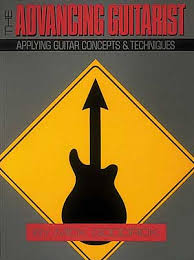
Mick Goodrick's "The Advancing Guitarist"


The exercise is thus: pick one string. Spend about ten minutes exploring creating melodies on just the one string. He sets up additional limitations as well. Only stick to one mode or key (you may want to keep a drone going on a lower string or other tone source). No chromaticism, just those seven notes. Bend only notes that are a half step apart.  (Check out Mick's book "The Advancing Guitarist" for other great limitation exercises.)


Seems pretty strict. What can a guitar player learn through this process? Well after about ten minutes, one finds themselves playing quite differently. In a sense, your playing is more melodic. Sometimes it sounds more like Eastern music. But for those ten minutes all the guitarist must focus on is ONE mode, ONE string and that is it. There is no worry about making changes, playing hot licks, or playing many notes.They can now explore other elements that are often neglected: dynamics, rhythmic motives, tone color, expression, articulation, and even silence.


Just creating a limitation exercise won't necessarily result in a masterpiece. It is often just an exercise. A way of practice. A method to let the muse explore every nook and cranny of that particular limitation. As a result, these limitations can bring about more freedom.


They next steps would be to:

  • try the other strings
  • try the other modes/keys
  • play it through a chord progression (or a tune)
  • add chromaticism
  • combine two strings (adjacent or non-adjacent)
  • use only one finger
  • use all four fingers
  • use both hands (tapping)
  • change tone color
  • come up with other additions on your own
Each of these additions can be added gradually on an as needed basis. Avoid the temptation to go through them all at once. This can be a concept you come back to for years to come. Each time you want to explore a fresh way of playing, revisit this or any of the other limitations we will explore in the future blogs.

Non-string players don't fret (ugh!). We will explore limitations that will work for you as well. For right now, try to think of a limitation you can apply to your instrument/voice. It doesn't have to be just a limitation on technique either. There are many musical limitations you can impose as well.

Melodic Contour Exercise

An effective and quite creative method for composing/improvising strong melodies would be to connect it with the visual artist's techniq...