Showing posts with label practice. Show all posts

Sunday, March 2, 2014

Review: Victor Wooten's "Groove Workshop"


Once in a while I would like to showcase books/videos/podcasts that I have found inspirational and useful. Today, let's check out a DVD by the bassist Victor Wooten.


A few years ago, I read Victor Wooten's "The Music Lesson: A Spiritual Search for Growth Through Music". It is a book filled with some stellar musical concepts. However, I think some people have trouble getting into this book for two reasons. One is the phrase "spiritual search". Depending on your cosmological perspective, this could be either welcoming or off-putting. The second is more of a barrier. It is presented in a fiction format. It stars a guru like figure named Michael who imparts his musical wisdom in almost a Carlos Castaneda fashion. Although I found the musical ideas great, I often wished it was more of a proper non-fiction book. But I give Victor credit in finding a creative way to publish a method book.

Wooten's "Groove Workshop" cuts to the chase and features Victor running a clinic with his band mate Anthony Wellington (it's funny when a bass player needs a bass player in his band!). In the video, Wooten imparts the same wisdom from "The Music Lesson" but in a more practical hands on way with a small class of bass students.


Now I want to say this off the bat. This is not just for bass players. It is not just for improvising musicians. EVERY musician would benefit from the ideas in this film. Even though the bass is Victor's vehicle, 95% of this 5 hour/2 DVD set is about music, pure and simple. He presents concepts that have not been explored elsewhere. I don't know why they haven't been explored, because they are paramount to all music creation and experience. (There are a few "bass geek" moments; like when the students are dying to know how Victor does his "double thumbing technique". But these instances make up a minority of the DVD.)


The basic premise is of Wooten's clinic is this:


  • What are the elements of music? 
  • What elements do we normally focus on in our practice?
  • What elements are we ignoring?
Victor quizzes the groups as to what makes up music. They flesh out a list of the following:
  1. Notes
  2. Rhythm
  3. Space
  4. Dynamics
  5. Articulation
  6. Technique
  7. Tone
  8. Listening 
  9. Emotion 
  10. Phrasing
Now, he asks the group an important question. Which of these elements do you focus on? Which are you practicing? Which element have you been taught the most in music lessons/classes? 

Number one. Notes. That is the overwhelming answer. Victor's premise is that it is easy to think and talk about notes. Keep in mind the notes category includes: pitches, chords, intervals, progressions, scales, modes. All of these involve "notes". 

Notes are important of course. But as Wooten demonstrates throughout the video, they are only part of the story. For some reason, the other 9 elements the make music come alive are often glossed over. We are just worried about playing, improvising, or composing with just the "right" notes. But what makes music come to life are ALL of these elements in consort. For some reason, the other ones are often overlooked (or at least not given the attention that we have given "notes".)

Now more mature musicians will recognize how all of the above are equally important. And a good music educator will teach ALL of these elements (And they do so even if they don't use the word "groove". Well played Bach has a "groove"!). 

But since the other nine elements tend to be a little more "abstract" they can be overlooked in favor of teaching the more logical side to "notes" (harmony, scales, etc.) Wooten has us explore ALL of these elements. In each chapter, Wooten explores these other elements in depth. He gives some very creative exercises to isolate and explore these elements. Once, again any musician would benefit.

As an aside, I am very impressed with Wooten as a teacher. Music educators need to check this video out just to observe his enthusiasm and mannerisms. He has a class of bass players of varying ability levels who he has never met before. Yet he has an impressive ability to coax musical results from each students regardless of their level. His positive nature is infectious. You can't help but just feel good listening to this man talk about music.

Here is the official preview video. It is sort of a good introduction, but it focuses a bit on Victor's chops (which are top-notch of course). There is a lot more to the 5 hour DVD that would appeal to every musician.


Friday, February 7, 2014

Mastery, Grit, and 10,000 Hours

Novelist Stephen King
“If you want to be a writer, you must do two things above all others: read a lot and write a lot. There's no way around these two things that I'm aware of, no shortcut.” 
― Stephen King, On Writing: A Memoir of the Craft


Another Mr. King quote! King's novels are fine, but I sure do love his quotes! I find them inspiring and with a few tweaks can be very applicable to the musical muse. Allow me to replace a few words...


“If you want to be a composer/musician/improviser, you must do two things above all others: listen a lot and compose/play/improvise a lot. There's no way around these two things that I'm aware of, no shortcut.” 

- My variant of Stephen King's quote 

That's basically it. I could end this post here. Mr. King has laid out a simple formula for mastery that cannot be denied. Listen and create. Repeat.

Malcolm Gladwell popularized the "10,000 hour" rule in his 2008 book Outliers. The summation of this rule is that it takes 10,000 hours of doing something to develop mastery. Gladwell cites cases from the Beatles cutting their teeth by playing cover songs in Hamburg dives to Bill Gates who had access to a computer in 1968 when they weren't as common as they were today. 

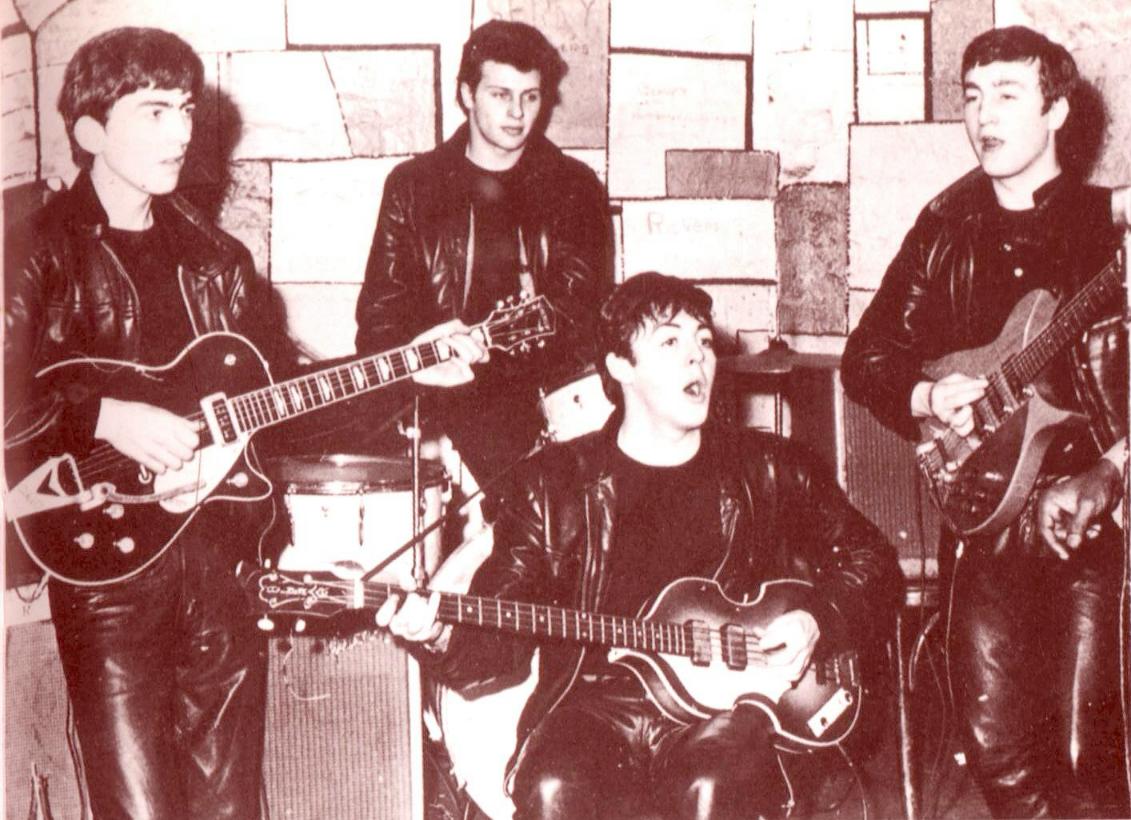
An important aspect of this 10,000 hours is the idea of mastering what has already been created in your art form. The Beatles spent their time in Hamburg not writing original "creative" works. They covered American rock and roll songs. The U.S. troops station there demanded the music of Little Richard, the Isley Brothers, and Chuck Berry. This forced the Fab Four to develop a solid vocabulary of rock and roll. It taught them to groove. It taught them stage presence. It taught them about the art of songcraft. By the time they penned their first number one hit in England ("Please Please Me") they have logged in 10,000 hours of mastering the art of performing and writing a hit song.

This "10,000 rule" is based on the research of psychologist Anders Ericsson. It has its critics who feel this rule has been misused as it has become quoted in many pop-psychology articles and blogs. Merely putting in time won't make one a master the critics argue. Even Ericsson has said, “You don’t get benefits from mechanical repetition, but by adjusting your execution over and over to get closer to your goal.” 

So that seems to be an important point. Practice involves repetition AND correction. There needs to be a high level of focus and determination to make those corrections. Cognitive psychologists have labeled this trait as "grit".  Daniel Coleman in his book, Focus: The Hidden Driver of Excellence explores this idea of grit as being a crucial pairing in making the "10,000 hour" rule work. Without getting your hands dirty in your practice and putting in some serious, focused labor the bulk of those 10,000 hours can be wasted time. (I just finished this book and highly recommend it. This combined with Robert Greene's Mastery takes off where Gladwell left us.)
Everyone can be creative. It seems to be a trite statement but its true. On some level, everyone has the ability to be inspired. Even the beginner musician can experience the thrill of exploration that even the greatest musical innovators experience. It would be very frustrating if you had to lock in 10,000 hours BEFORE you could create. 

However, you must know that these early creative attempts will not be original. They won't be masterpieces. They will probably not even be good. At least not without developing a solid foundation of skills and knowledge. It is impossible to create a truly unique, quality piece of work until you have created a LOT of derivative works. 


Students with a creative urge are often frustrated by this. They have a strong desire to create something groundbreaking but they haven't yet mastered the basics. Without a command of what has already been created in their field, that won't know how to be original. What rules should you break? What is the basic vocabulary of style? What elements of preexisting works can be borrowed and combined to create new, original works?

A solid creative foundation needs:
  • A command of musical elements (rhythm, melody, harmony, form, timbre)
  • A deep knowledge of style and genre (not all styles and genres, but at least the ones in your purview)
  • The study of repertoire in that genre from the earliest days to the present
  • An apprenticeship of two types. A formal student-teacher relationship AND the tutelage of the great artists in the field through recordings and live performances. 
  • A venue. The student needs an outlet to showcase the mastery of the above.
 In addition, you need to have a desire to explore. "What if?" should be a regular part of this stage. 
  • "What if I harmonize this melody in fourths?"
  • "What if I play this tune in 7?"
  • "What if I add more dissonance? More consonance?"
  • "What if I add more space?"
  • "What if I ..."
With each new question you will be creating something new. Evaluate the new product. If it is good, go on from there asking a new "what if" question. If it doesn't work out, ask a different question.

So wherever you are at in laying your foundation, ask these questions. Focus and develop your inner grit. And start clocking in some of those 10,000 hours!

Melodic Contour Exercise

An effective and quite creative method for composing/improvising strong melodies would be to connect it with the visual artist's techniq...